When you mention an investment property in Adelaide to people a common response is “why on earth would you invest in Adelaide?!”. There’s generally some laughter, the eyebrows definitely rise, a lot of people won’t take you seriously…
Let’s be honest, it’s never going to be a Melbourne or Sydney. But the fact remains that the long term growth rate in Adelaide is in fact very strong – it has achieved over 8% p.a. compound annual growth over the last 40 years. There is absolutely a strong track record for house price growth in Adelaide.
Interestingly however, over the last 5 years, house prices in Adelaide have only grown by 2.8% p.a., indicating that as at November 2016 we’re arguably at a lower point in Adelaide’s property cycle.
A lot of people who live in Melbourne and Sydney just follow their local markets and don’t realise that much of the country, outside of the two major cap cities, has actually been relatively flat (or in the cases of Darwin and Perth in decline) over the past couple of years.
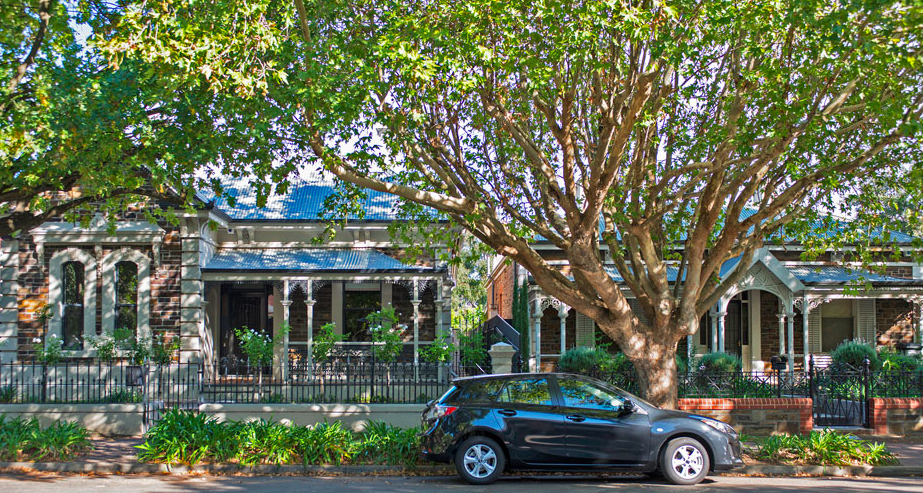
Victorian villas accompany stone cottages in the suburb of Norwood, South Australia. Source realestate.com.au
If you’re a countercyclical investor, and looking for maximum growth in the short term (2-4yrs), then buying at a low point in any market is imperative.
This isn’t to say Melbourne/Sydney may not be the better long term investments, they very well may be. However the stronger short term growth that may be available now in other interstate markets could benefit investors by allowing them to generate stronger returns in the short term and then potentially buy more favorably in Melbourne/Sydney at a later stage (and with more cash or equity too).
For example, say you were able to achieve 10% p.a. compound growth over 3 years on a $700,000 investment made today in Adelaide. That asset would grow to being worth $931,700 after three years. This represents a total return of 33.1% and provides a further $231,700 equity.
Imagine the opportunities this could afford you in the higher demand Melbourne/Sydney markets in a few years from now. You could either sell Adelaide and take out a much smaller home loan debt against your new Melbourne/Sydney owner occupied property, or you could use the equity to buy additional investment properties in Melbourne/Sydney without having to use any of your own cash.
If within 2-4 years the Melbourne/Sydney markets have cooled from the positions they’re both currently in today, then at that time you would be buying into those markets at a better time as well. How would you feel if the $1 million home you buy in Melbourne today is worth $1.05 million in 4 years from now (an increase of $50,000 or just 5% total over 4 years)? Right now Melbourne and Sydney are sellers markets. Growth over the past 3 years has been spectacular but there’s only so long that can last before stock becomes prohibitively expensive and buyers retreat.
Here’s some other data supporting Adelaide as a capital city worth considering:
- Residents have the capacity to spend more on housing: The current debt/income ratio in Adelaide is only 27%, that is the average mortgage repayments for residents of Adelaide are only 27% of their average household income, this compares to a 44% ratio in Melbourne and 59% in Sydney, it also compares to a ratio of between 30-45%+ which was seen during Adelaide’s last three booms (1989, 2002-2004, 2007-2008). This indicates affordability and again a low point in Adelaide’s property cycle
- Highest infrastructure spending relative to GDP of all cap cities: At 6.07% Adelaide currently has the highest infrastructure spend as a proportion of GDP out of all Australian capital cities. This is now starting to flow through positively to employment data (see below)
- Unemployment is now coming down after 4 years: Unemployment in Adelaide has traditionally been high, and in recent years it has been negatively affected by the decline of Australia’s car manufacturing sector. Nevertheless the unemployment trend has recently just reversed for the first time in 4 yrs (it rose from 5.61% to 8.0% from 2012 to 2016, it has just fallen 1.1% and is now sitting at 6.5%)
- Value relative to Melbourne/Sydney is now particularly high:
- Adelaide’s median prices typically sit 83% and 39% behind Sydney and Melbourne respectively, currently prices are much further behind. Right now Adelaide is 127% cheaper than Sydney and 65% cheaper than Melbourne.
- The quality of housing stock in Adelaide is also high (refer photo above, typical of inner city suburbs) so investors can buy a quality period home in a blue-chip suburb 3km from Adelaide CBD for less than $700,000. At this price in Melbourne or Sydney you’re looking at a B or C grade property/suburb only.
- Affordability issues create migration towards cheaper markets and this should put upward pressure on Adelaide prices
The figures from this article have been sourced from Performance Property Advisory’s latest research on the Adelaide property market. I have confidence in their research because they cover the national market and aren’t incentivised to recommend any one capital city or location over another.
Most buyers advocates only have the resources to research and operate in a select few suburbs or perhaps a single capital city market in Australia. They talk up the benefits of ‘specialising’, which does have some validity, however restricting ones investment property search to a few suburbs or one capital city only is clearly limiting.
It’s also worth nothing that when we say “Adelaide”, we’re really just talking about 15 or so of the best blue chip suburbs surrounding the CBD (Goodwood, Hyde Park, Unley, Parkside, Norwood, North Adelaide etc.). This is where the doctors, lawyers and young professionals live. They’re Adelaide’s most desirable suburbs and not the mortgage belt or lower socio economic areas more prone to employment issues and other economic shocks.
Of all the suburbs in Adelaide, the top 15 blue chip suburbs are also the ones which have the highest level of amenity. They’re closest to the best schools, cafes/restaurants, public transport, parklands, main employment centres etc.
Although population growth into Adelaide is small in comparison to the likes of Melbourne and Sydney, these blue chip suburbs in Adelaide will always be desirable and more than likely also where all new people coming into Adelaide are going to want to live.
So with all this demand, and limited supply (remember there’s no new land being released or new suburbs being created within such immediate proximity to Adelaide CBD, and there are height restrictions as well), the prospects for capital growth in these suburbs is enhanced further.
When I interviewed property expert Margaret Lomas in September 2016 she spoke very favourably about Adelaide and described it as a low risk city to invest in and do small developments in because a small but steady amount of growth can always be relied on. (you can listen the interview with Margaret here, the relevant section starts at 41:05).
What are your own thoughts on Adelaide, is the research convincing at all or are you still tempted to invest in the bigger cities like Melbourne and Sydney, even although they may be at further points in their respective cycles?
Next week I will publish a case study of the property I recently purchased in Adelaide.