With the weather still warm I thought of writing this article about my recent experience designing and building an in-ground swimming pool for the first time.
Hopefully there’s some value here for anyone interested in installing their own pool soon.
If anyone would like detailed costings or referrals to the designer or contractors we used just email me back and I’ll happily provide.
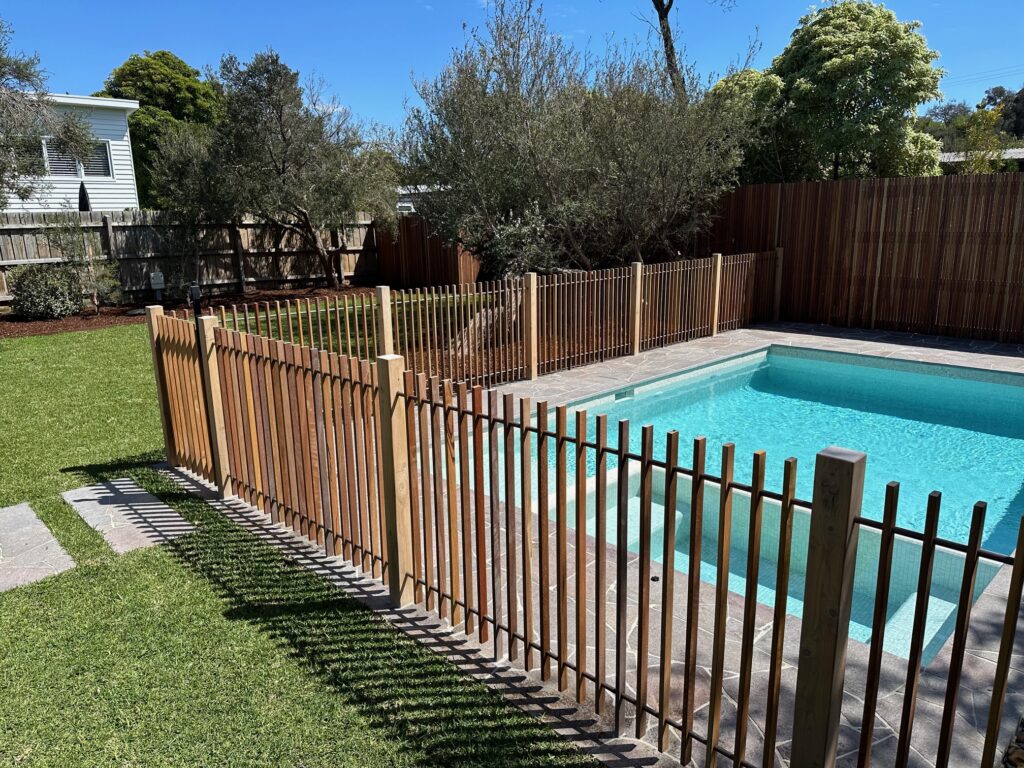
Here’s a pic I took last week. We finally upgraded the $15 plastic ‘fill-up’ from K-Mart…!
—
1. Design considerations
Size, layout, and position
The pool needs to suit the scale of the backyard. Ours ended up at 4.2m x 7.0m which was a good fit for the size of our garden. Consider which parts of your garden get sun/ shade, and talk to your pool builder about compliance requirements which can further impact positioning.
Type of pool: concrete vs fibreglass
The next key decision is the type of pool you’re building. For ‘in-ground’ pools the main options are concrete or fibreglass. We chose concrete since quality, longevity and custom design options were important to us. Fibreglass pools are often prefabricated off-site and then craned into position. They’re quicker and cheaper but come with less options for customisation.
Pool only vs combined pool/ spa
We went with the combined pool/ spa option which if the budget allows I’d highly recommend. It can get cold, tiring and even boring being in the pool only for extended periods. We found the spa significantly increased the time we could all comfortably spend outside enjoying the space.
Steps and depths
Steps are great for relaxing and for kids to play on, but they can limit jumping and diving areas. We requested soft edges on our steps (and on the pool/ spa junction, and on the both sides of the coping) for added safety.
We chose a pool depth of 1.1 metres at the shallow end and 1.8 metres at the deep end which turned out to be a good choice. Taller adults can still stand at the deep end yet it isn’t so deep that younger kids struggle to reach the bottom. It feels safe while still being fun and functional.
2. Functionality and finishes
Tiling
Tile choice impacts how the water looks once the pool is filled. We selected a small light grey tile (Luna 23mm CMC400 from The Pool Tile Company) resulting in a light aqua blue water colour. The Pool Tile Company is a popular supplier with a well-known showroom in Dandenong South (for Melbournians, open Saturday mornings) where you can see many kinds of displays and both tiling and paving arrangements.
Coping/ paving
We used porphyry crazy paving from Eco Outdoors for both the pool coping and surrounding paving. This was a more expensive design option but it’s striking in appearance and we have no regrets. A small ‘construction join’ between the pool slab and paving slab is hardly noticeable and we went ahead with this to prevent potential cracking.
Heating options
Pool heating is a major consideration. You need to balance both installation and running costs, with effectiveness. We went with a combination of gas and roof solar. Solar does a great job of heating the pool inexpensively during summer. Gas allows the pool or spa to be heated quickly or when it’s cold outside!
Electric heat pumps are another more cost effective option, however from the people we spoke to feedback and performance was mixed, so we decided against it.
Pool cleaning options
We chose in-floor cleaning, which was an additional upfront cost but something we are very glad we included.
The system uses jets to push debris toward the skimmer box, eliminating the need for robotic cleaners or “creepy crawlies”. We’re very happy with this decision. All I’ve needed to do is occasionally use a net to clean up some of the larger leaf litter. It’s low effort.
Pool covers
Pool covers are popular for heat retention, but we chose not to install one, both for cost savings and due to concerns around mould growth. The trade-off is higher reheating costs.
Pool fencing
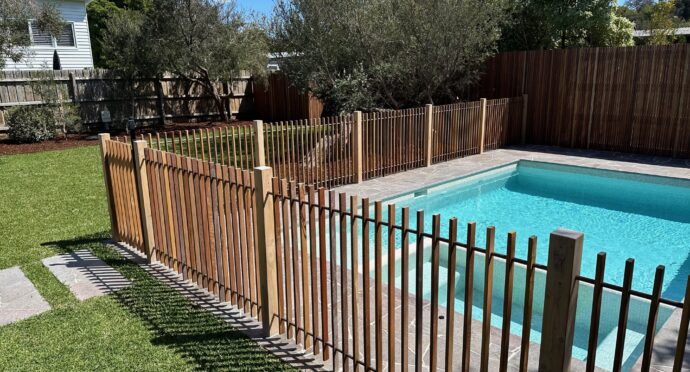
Common fencing options include glass and aluminium, both of which are relatively inexpensive. We went with timber posts and battens which tied in nicely with spotted gum battens we used for new boundary fencing. It’s a more coastal look and requires minimal maintenance. The installation cost was similar to glass.
3. Other considerations
Additional landscaping
Installing a pool is a major project, and so it can be efficient to tackle other landscaping works at the same time while trades are already on-site. In our case we installed a new outdoor shower, new lawn, and some basic planting. The outdoor shower has been a hit, I’ve included a second pic below, it’s one of the best design decisions we made!
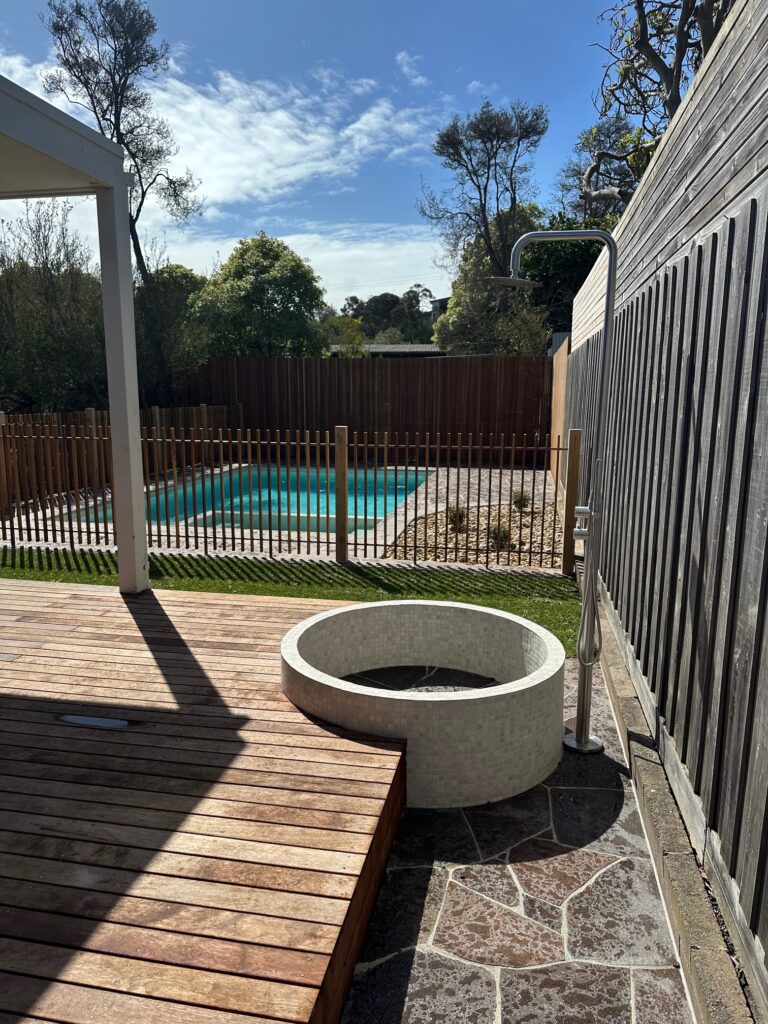
I’d also highly recommend a covered alfresco area near the pool if that’s possible. It helps a lot in terms of being able to spend more time outside and being able to supervise children for longer periods.
Water selection
The main options for water selection are chlorine or magnesium (sometimes referred to as mineral salts). We chose magnesium which can be nicer to swim in albeit more expensive to run.
—
In summary a pool can significantly enhance how you use and enjoy your outdoor area but like any major project the outcome is heavily influenced by good planning and design.
Best wishes for the year ahead and again please reach out if you’d like any additional contacts or info.