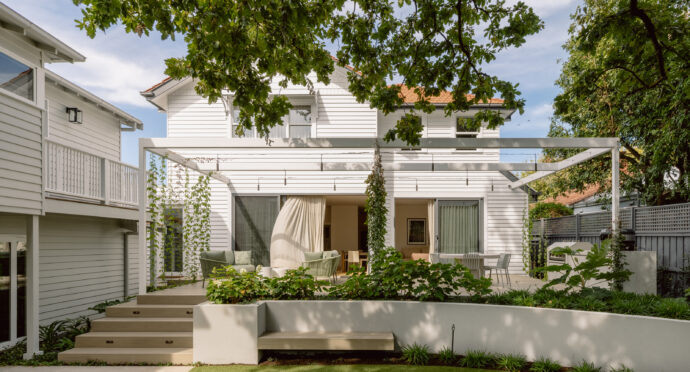
For many families, the question of upgrading the family home tends to surface at the same life stage… careers are established, incomes are higher and more stable, children are growing, and the limitations of the current home become more obvious.
Extra bedrooms, a second living area, better school zones, or simply more space often move from “nice to have” to “non-negotiable”.
At the same time, there is now growing discussion about the possibility of further interest rate increases from the RBA.
Higher interest rates tend to place downward pressure on property prices, or at least slow price growth. While no one can time the market perfectly, a softer market can present a strategic opportunity for upgraders, particularly those who already own property.
This article explores why a weakening market can favour upgraders, the two main pathways to upgrading (buying first or selling first), and how to think about each option in the context of your family, finances, and risk tolerance.
Why a softer property market can favour upgraders
There is an important distinction between first-home buyers and upgraders. First-home buyers are exposed to one side of the transaction – the purchase. Upgraders are exposed to both sides – selling and buying – usually in the same market.
When prices are rising quickly, upgrading can feel frustrating. You might sell your current home for a strong price, but the home you actually want to buy may have risen even more in dollar terms. In contrast, when the market softens, the reverse dynamic often applies. Even if prices fall by a similar percentage across the market, the dollar impact is usually larger at the higher end. For example:
- A 5% decline on a $2.0 million home is $100,000
- A 5% decline on a $3.0 million home is $150,000
If you are selling the cheaper property and buying the more expensive one, the “discount” you receive on the upgrade can outweigh the discount you accept on the sale. In simple terms, you would generally prefer to buy the more expensive asset in a softer market rather than a hotter one.
This doesn’t mean prices must fall sharply for upgrading to make sense. Even a market with less competition, fewer bidders at auctions, and more negotiable vendors can materially improve the experience and outcome for buyers upgrading their home.
The two main upgrade strategies…
Once the decision to upgrade is on the table, the next question is how to do it. Broadly, there are two main approaches:
- Buy first (often with a longer settlement), then sell
- Sell first, then buy
Both can work well. The right choice depends on your financial position, risk tolerance, family circumstances, and the type of property you are buying.
If your financial position allows there is also a third strategy of keeping the existing home as an investment property. This is beyond the scope of this article but can also be assessed when reviewing strategies and structures with your adviser.
Option 1: Buying first (potentially using bridging finance)
Buying first means you secure your next home before selling your current one. To make this possible, many households use bridging finance, which temporarily allows you to hold two properties at once.
A typical bridging arrangement involves:
- A short-term loan that “bridges” the gap between purchasing the new home and selling the existing one
- Interest-only repayments during the bridging period
- A defined maximum timeframe (often 6–12 months, sometimes up to 18 months in specific circumstances)
Once your existing home is sold, the proceeds are used to reduce the debt to a standard long-term home loan.
Advantages
- Certainty of outcome
- You know exactly where you are moving. This is particularly valuable for families with young children, schooling considerations, pets, or specific location requirements.
- No need for temporary accommodation
- Avoids the disruption, cost, and inconvenience of renting or moving multiple times.
- Stronger negotiating position as a buyer
- You can buy without sale conditions, which can make your offer more attractive in competitive situations.
- Less emotional pressure
- You are not trying to buy a home against a ticking clock after selling your current one.
Disadvantages
- Higher short-term financial exposure
- For a period, you are effectively carrying the debt of two properties. Even if interest is capitalised, serviceability must be demonstrated upfront.
- More complex lending assessment
- Bridging finance is not offered by all lenders and is assessed conservatively. Cash flow buffers and equity levels matter.
- Risk if your property takes longer to sell
- If market conditions deteriorate or your home takes longer than expected to sell, the bridging period can become stressful.
Note that some buyers will negotiate longer settlement periods in these scenarios to reduce the likelihood of bridge finance being required. If they get a long settlement on the purchase, then sell their existing home swiftly, it’s possible to settle the sale transaction first, or even on the same day (simultaneously) as the purchase. In both cases any bridge finance approvals can simply be cancelled.
Who Is This Best Suited To?
Buying first is generally best for:
- Dual-income households with strong, stable incomes
- Clients with substantial equity in their current home
- Families who value certainty and minimal disruption
- Buyers targeting a very specific property or location
Option 2: Selling first, then buying afterwards
Selling first means you sell your existing home before committing to the next purchase. Once sold, you either:
- Buy immediately (if timing aligns), or
- Move into temporary accommodation (often renting) while you search
Advantages
- Financial certainty
- You know exactly how much equity and cash you have available. There is no bridging debt and no risk of carrying two properties.
- Stronger borrowing position
- Without the complexity of bridging finance, loan approvals are often less conservative and unlock greater purchasing power.
- Less exposure to market risk
- You are not exposed to the risk of selling in a falling market after you have already committed to a purchase.
Disadvantages
- Temporary accommodation
- Renting can be disruptive, especially with children. Storage costs and multiple moves can add up.
- Time pressure when buying
- Once sold, there is often a psychological (and practical) urgency to buy again, which can lead to compromise.
- Uncertain timing
- There is no guarantee how long it will take to find the right next property, particularly in tightly held areas.
Who Is This Best Suited To?
Selling first often suits:
- More conservative households
- Single-income families or those with tighter serviceability
- Buyers who may be more flexible on timing and location
What if you want to buy and build?
If your upgrade strategy involves buying a property to demolish or significantly renovate, or buying land and building, the considerations change materially.
While bridging finance exists for straightforward buy-sell scenarios, buy-and-build bridging solutions are very rare and often very expensive. This is because lenders are effectively funding:
- The purchase of the new property or land and construction costs
- While still waiting for the sale of your existing home
- Over a much longer and less predictable timeframe
From a lender’s perspective, this introduces significant risk and administrative complexity. As a result:
- Very few lenders offer this type of lending structure
- Those that do often price accordingly
- Time limits can be restrictive relative to real-world build timelines
The reality for most buy-and-build upgraders
For most families the realistic expectation here should be:
- Sell the existing home
- Rent for a period
- Buy land or a development site
- Build
- Accept that you will have to move more than once
So how do you play it?
A potential shift to a softer housing market does not automatically mean prices will fall sharply, nor does it mean everyone should upgrade immediately. However, for existing homeowners considering a move to a higher-value property, these conditions can create genuine strategic opportunities.
The key is not predicting the market, but aligning:
- Your family’s needs
- Your financial capacity
- Your risk tolerance
- And the right upgrade strategy
There is no universally “correct” approach. Buying first offers certainty but requires financial strength and comfort with short-term risk. Selling first offers safety and clarity but demands flexibility and patience.
Buy-and-build strategies require even more planning and a willingness to accept temporary disruption.
The most important step is understanding your options before you act, so that when the right property or opportunity arises, you are making decisions from a position of clarity rather than pressure.